# Release Pipeline Configuration \[Azure DevOps Server (TFS) - Azure DevOps Services (ADO)]
## Overview
Synchronizing Release Pipelines from Azure DevOps Server (TFS) to Azure DevOps Services (ADO) enables teams to modernize their delivery workflows and leverage cloud-based CI/CD capabilities. This integration ensures that Release Pipeline configurations, references, and dependent artifacts are consistently transferred to the target ADO project—eliminating manual re-creation, reducing configuration errors, and accelerating release readiness.
space.vars.SITENAME provides bidirectional integration between Azure DevOps Server (TFS) and Azure DevOps Services (ADO).
This page covers the bidirectional integration of Release Pipelines and their dependent artifacts.
## System Prerequisites
* Configuring [system pre-requisites](https://docs.opshub.com/v7.215/integrate/integration-prerequisites) is mandatory for successful system configuration.
* Check out the pre-requisites for [Azure DevOps Server and Azure DevOps Service](https://docs.opshub.com/v7.215/connectors/azure-devops#prerequisites)
* To understand the pre-requisites for enabling Release Pipeline synchronization, refer to the section: [Release Pipeline Pre-requisites](https://docs.opshub.com/v7.215/connectors/azure-devops#release-pipeline-entity)
## Integration Configuration
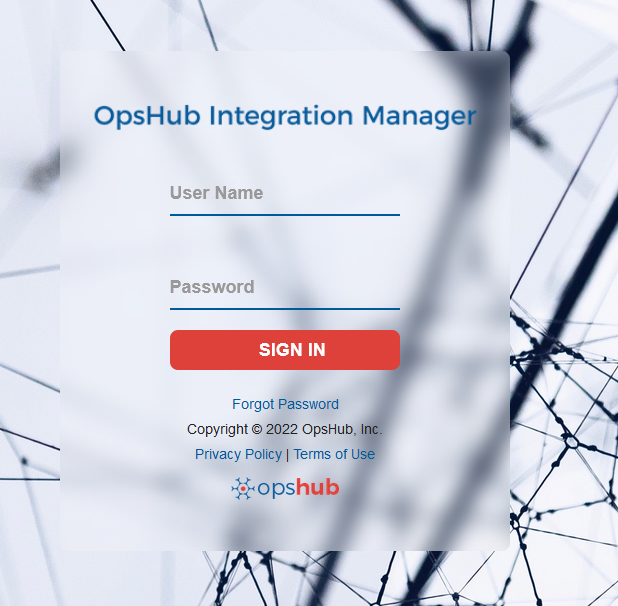
* Log in into space.vars.SITENAME. The default credentials are:\
**User Name:** admin, **Password:** password
> **Note**: **Proxy parameters:** Before you proceed with the configuration, check whether the system is behind a proxy server. If yes, then set up [proxy parameters](https://docs.opshub.com/v7.215/manage/administrator/proxy-setting) in space.vars.SITENAME.
* Since Release Pipeline may reference dependent artifacts such as **Agent Pools**, **Service Connections**, **Task Groups** and **Variable Groups**, we will configure mappings for these dependent artifacts as well, along with the Release Pipeline.
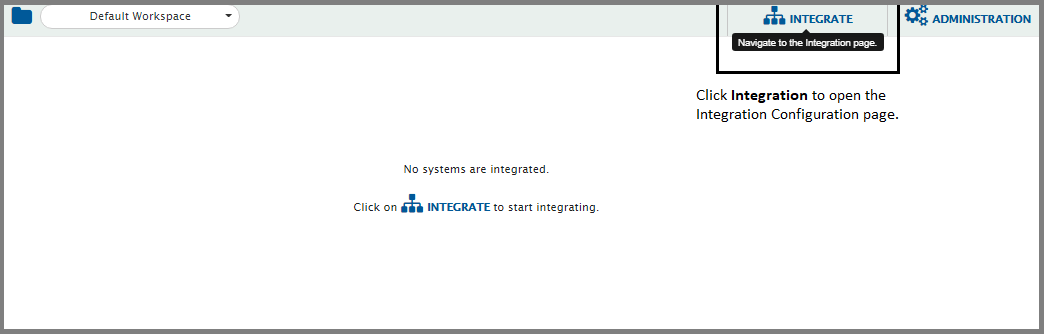
* Click **Integrate** on the top right corner of the screen and then click the plus \[+] icon.
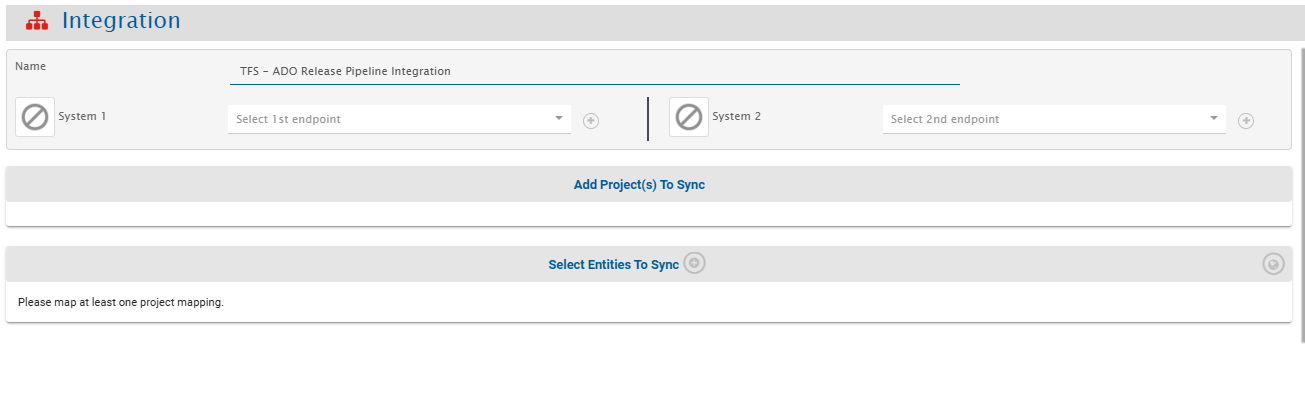
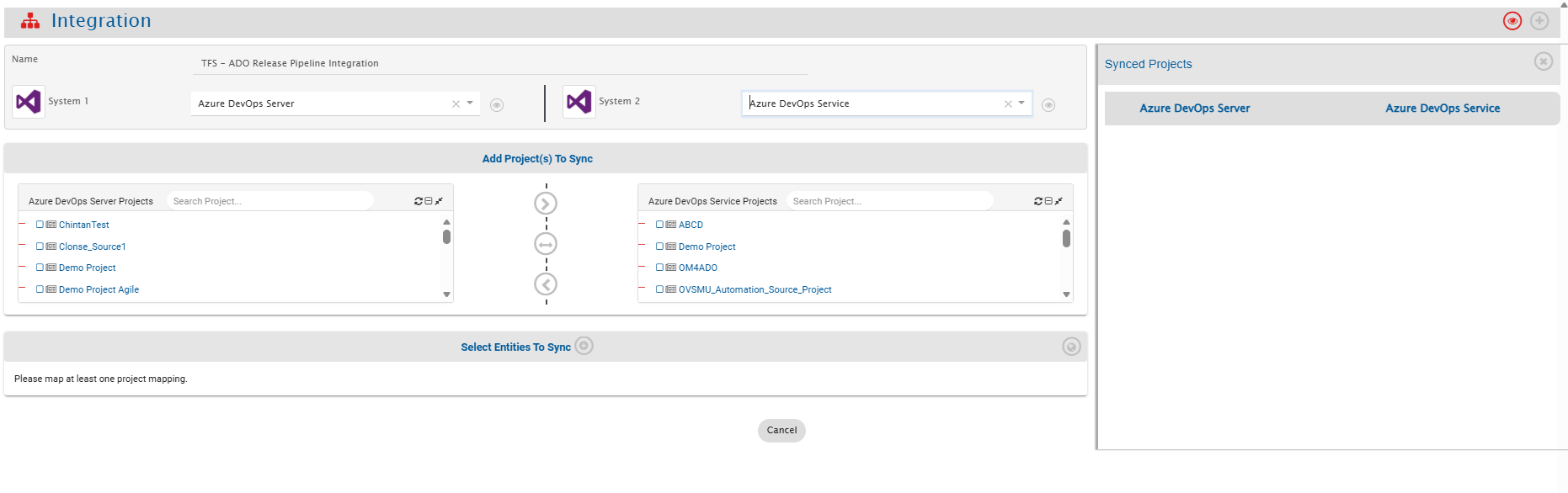
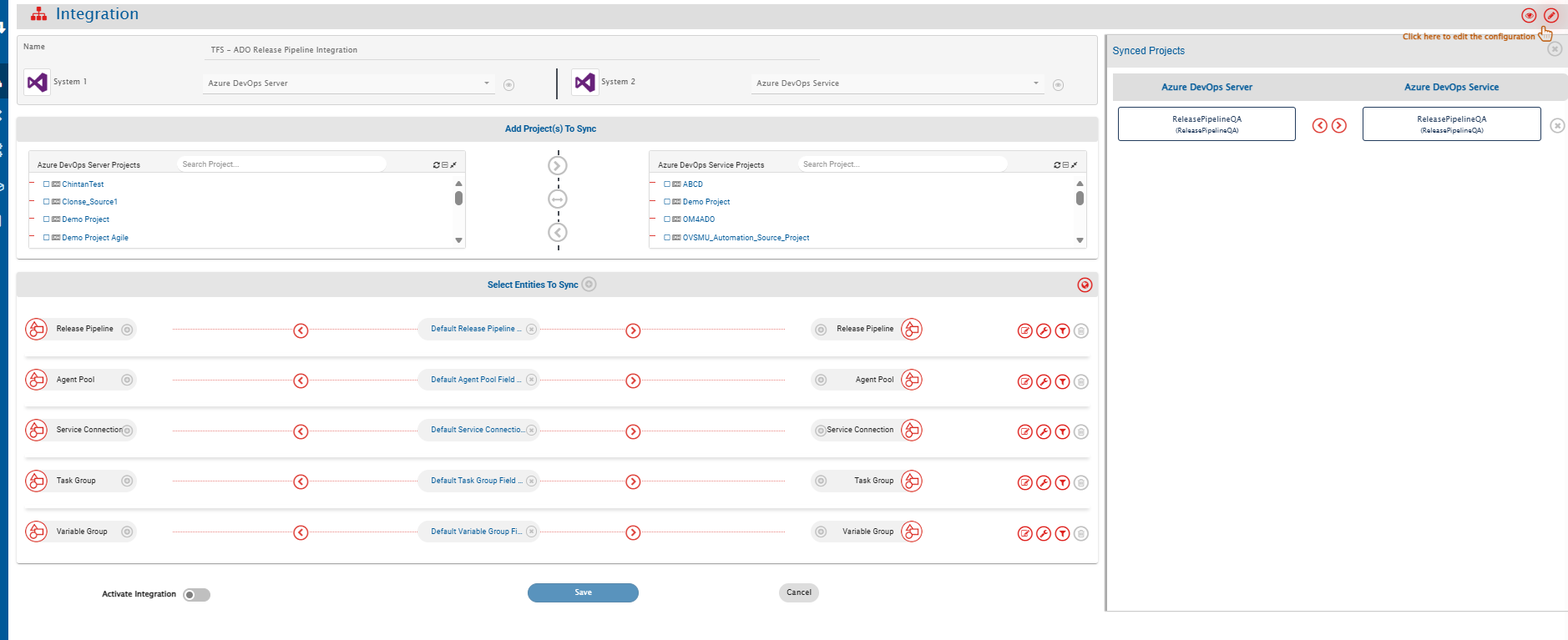
* The integration configuration page opens:
* Integration Configuration for **Release Pipeline** Entity:
* Enter a unique name for the integration. For example, this integration is named **Azure DevOps Server (TFS) – Azure DevOps Service (ADO) Release Pipeline Integration**.
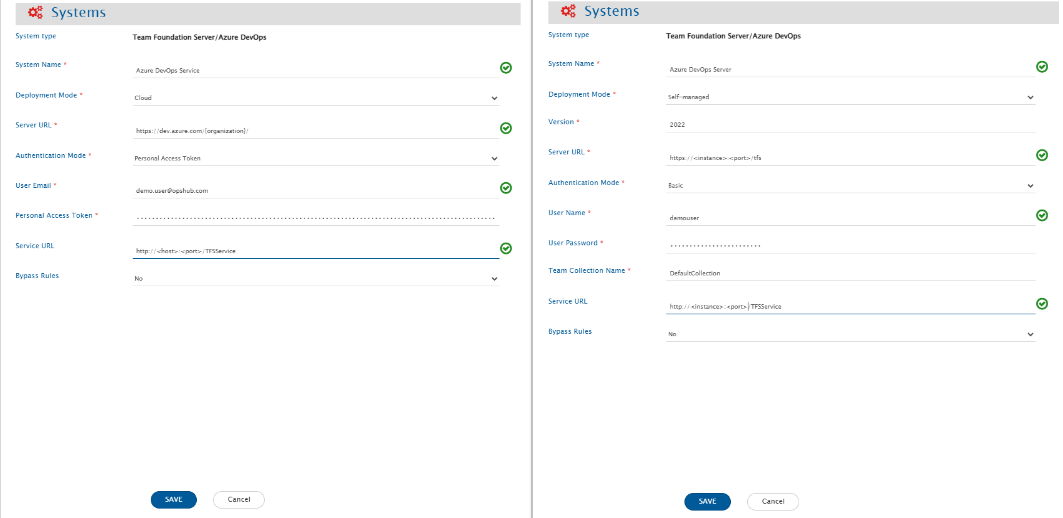
* Click plus \[+] icon adjacent to the System 1 and System 2 fields one by one to configure Azure DevOps Server (TFS) and Azure DevOps Service (ADO).
### Configure System(s)
* Configure Azure DevOps Server (TFS) –Azure DevOps Service (ADO) by following the steps given on [Azure DevOps Server/Service System Configuration](https://docs.opshub.com/v7.215/connectors/azure-devops#system-configuration).
* When you save the respective system configuration pages after configuring the systems, the systems will automatically be added to the integration. Proceed to adding projects and entities in the integration.
### Select Projects and Entities
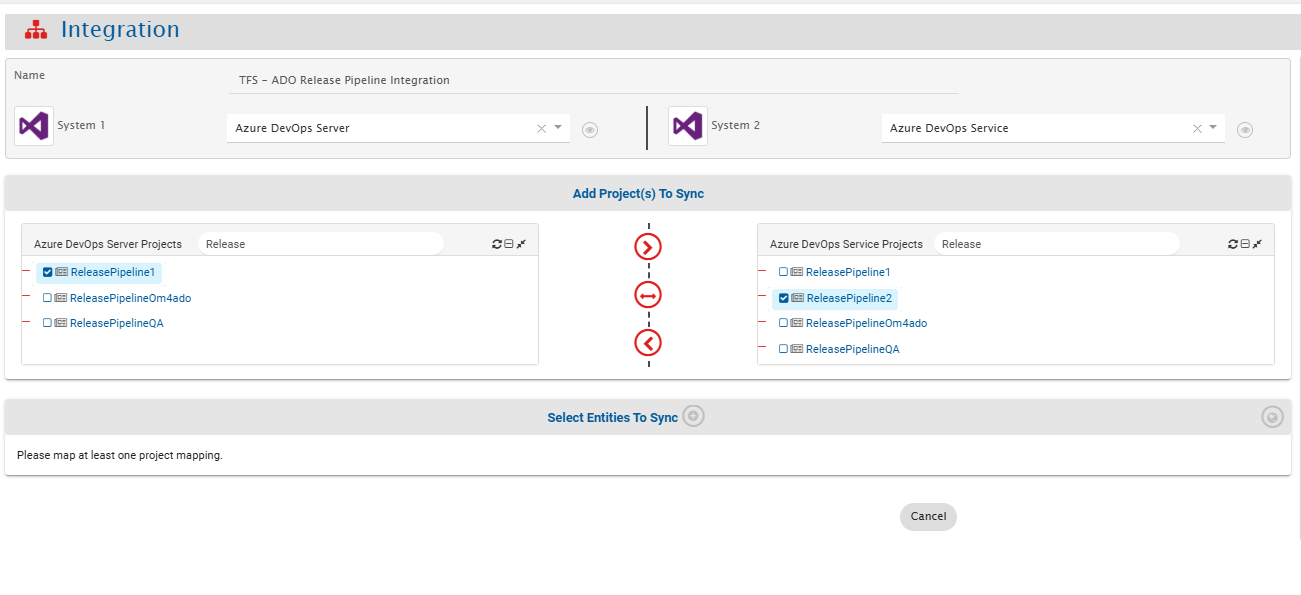
* In the **Add Project(s) to Sync** section, select the projects you want to synchronize between Azure DevOps Server (TFS) and Azure DevOps Service (ADO) by clicking them.\
Example: **ReleasePipeline1** from Azure DevOps Server (TFS) and **ReleasePipeline2** from Azure DevOps Service (ADO).
* Once the projects are selected, define the source project and target project:
* **Forward (>)** → data flows from Azure DevOps Server (TFS) to Azure DevOps Service (ADO)
* **Backward (<)** → data flows from Azure DevOps Service (ADO) to Azure DevOps Server (TFS)
* **Bi-directional (<-->)** → data flows both ways
* Once the direction is selected, the arrows will turn grey. We have selected the bi-directional flow.
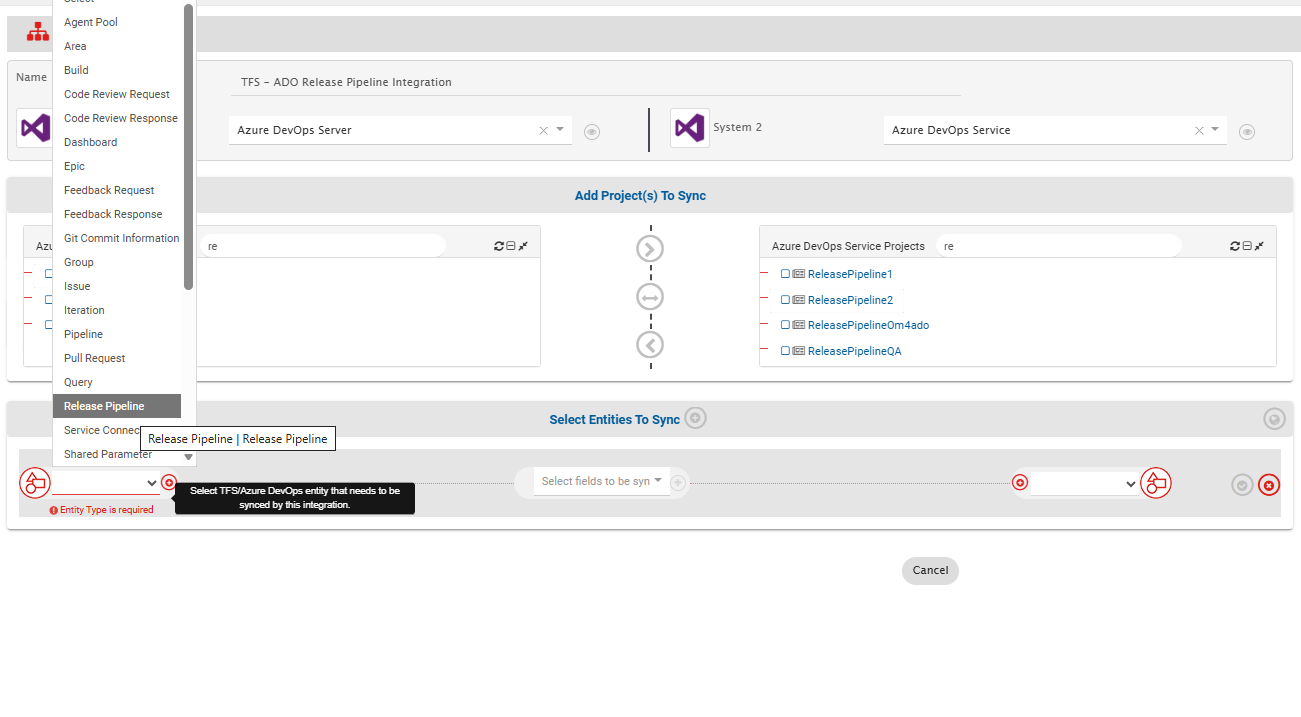
* space.vars.SITENAME fetches entities available in both systems and shows them in entities list for both systems. From the **Select Entities to Sync** section, select the relevant entities for both systems.\
Example: **Release Pipeline** from both Azure DevOps Server (TFS) and Azure DevOps Service (ADO).
* The next step is to define the fields that need to be integrated for every entity mapped. Once the entities are selected, click the plus icon \[+] adjacent to **Select fields to be Synced** to create the mapping between these two entities. You will now be navigated to Mapping Configuration screen.
### Mapping Fields
#### Entity: Release Pipeline
* From the **Select Entities to Sync**, select the relevant entities for both systems.\
In this case: **Release Pipeline** from Azure DevOps Server (TFS) and Azure DevOps Service (ADO) . Create a Mapping for this entity as well.
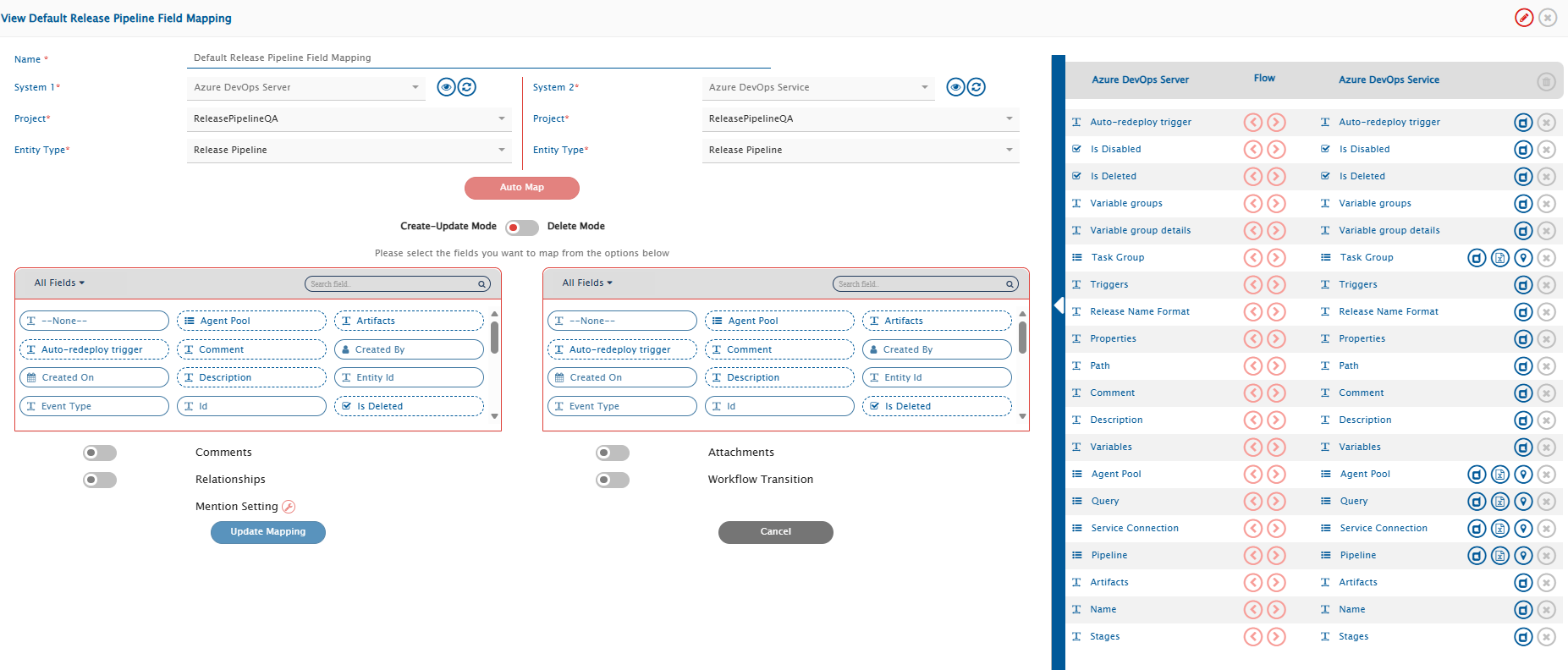
* Following details are automatically populated in the Mapping section: **Systems, Projects, Entities, and Mapping Name**. If you wish, change the name for the mapping in the **Name** field.
* Now, either click **Create from Scratch** to define the mapping from scratch or click **Auto Map** to automatically map all fields with the same name.
* Even if you select the **Auto Map**, space.vars.SITENAME will allow you to remove or add more fields before saving mapping.
* Since a Release Pipeline may reference dependent artifacts, ensure that **Agent Pool**, **Service Connection**, **Task Group** and **Variable Group** are mapped as reference fields.
* You can also import a mapping. Refer to Release Pipeline field mapping to import the default field mapping from Azure DevOps Services to Azure DevOps Server for the Release Pipeline entity.
* You may further modify the imported mapping based on your use case.
* Once the mapping is created, click the **Create Mapping** to create & save this mapping as well.
#### Dependent Artifacts:
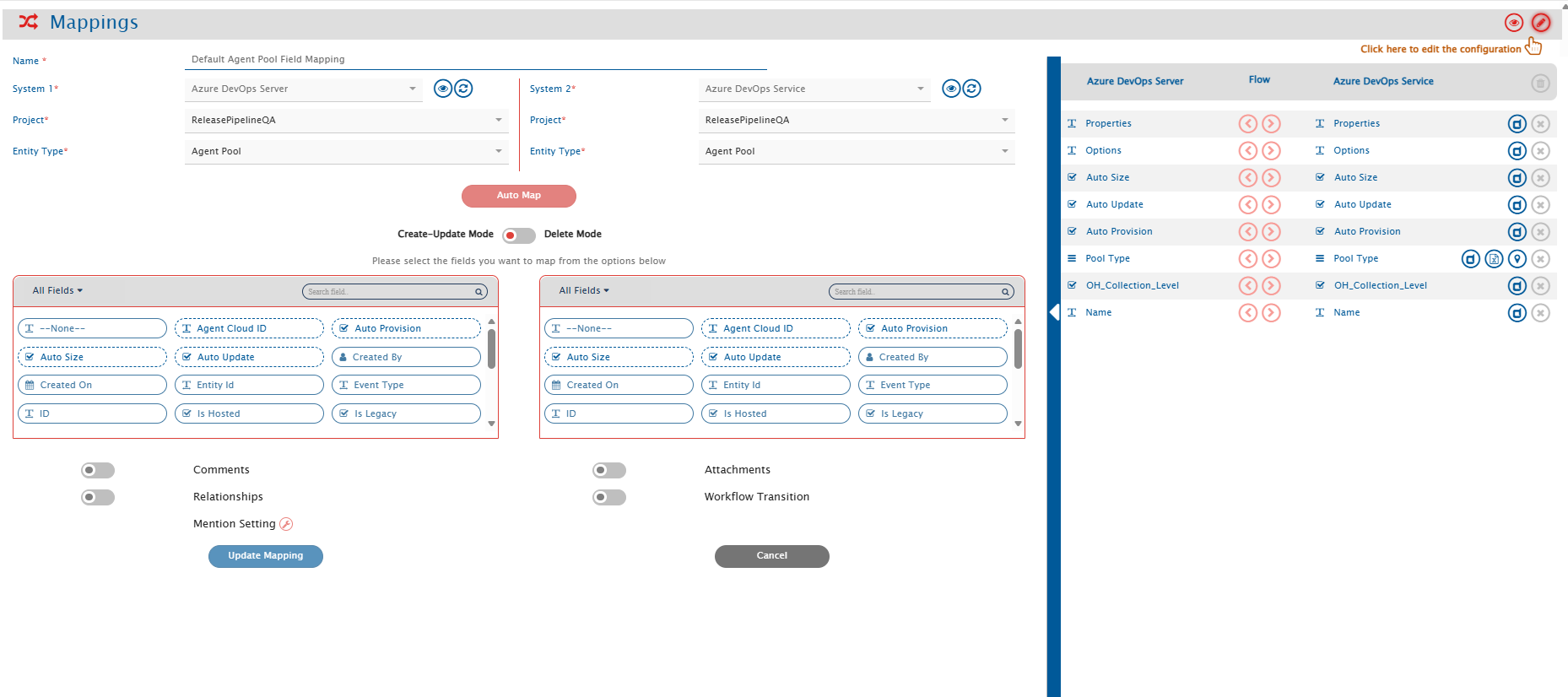
**Agent Pool**
* Similar to selecting the **Release Pipeline** entity, select the **Agent Pool** entity from the **Select Projects and Entities** section. Refer to [Select Projects and Entities](#select-projects-and-entities) and follow the steps below to create the mapping for this entity.
* Now, either click **Create from Scratch** to define the mapping from scratch or click **Auto Map** to automatically map all fields with the same name.
* You can also import a mapping. Refer to Agent Pool field mapping to import the default field mapping from Azure DevOps Services to Azure DevOps Server for the Agent Pool entity.
* You may further modify the imported mapping based on your use case.
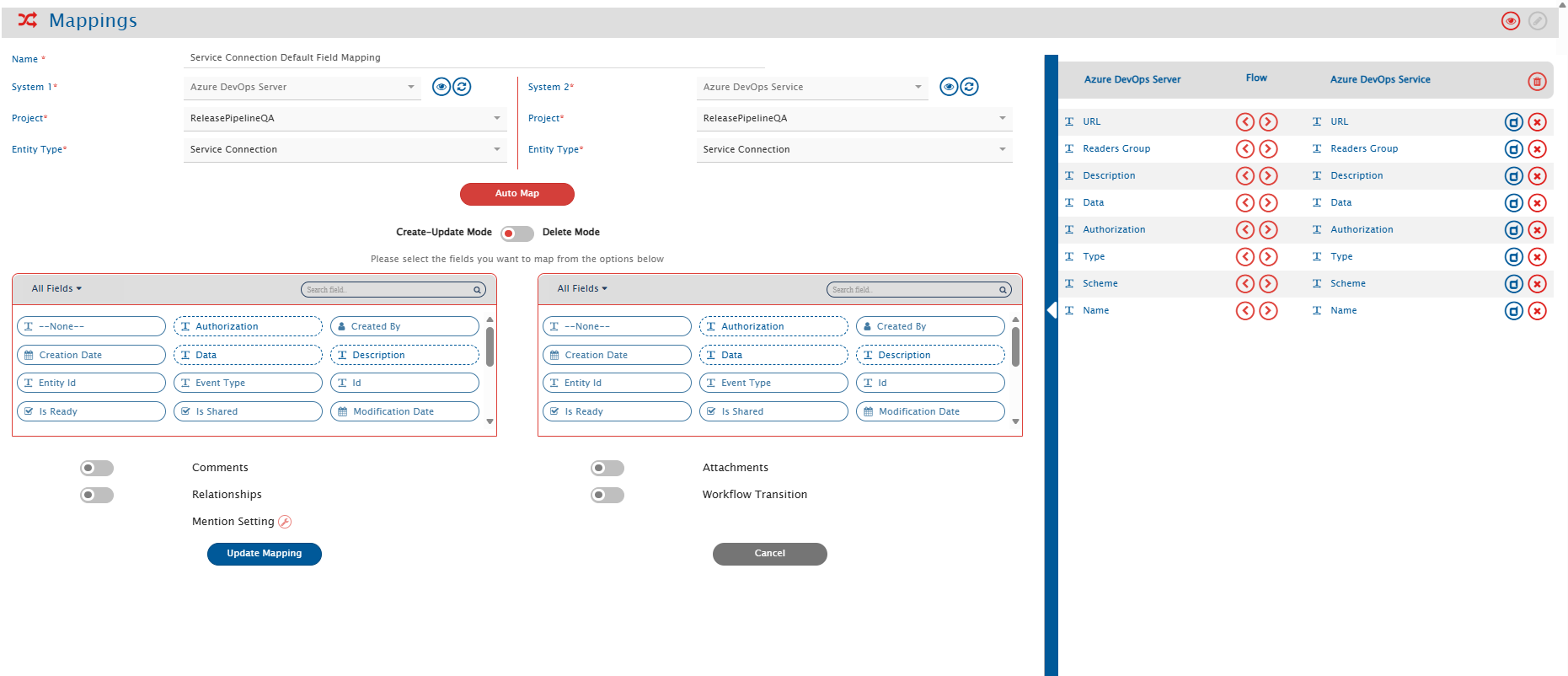
**Service Connection**
* Similar to selecting the **Release Pipeline** entity, select the **Service Connection** entity from the **Select Projects and Entities** section. Refer to [Select Projects and Entities](#select-projects-and-entities) and follow the steps below to create the mapping for this entity.
* Now, either click **Create from Scratch** to define the mapping from scratch or click **Auto Map** to automatically map all fields with the same name.
* You can also import a mapping. Refer to Service Connection field mapping to import the default field mapping from Azure DevOps Services to Azure DevOps Server for the Service Connection entity.
* You may further modify the imported mapping based on your use case.
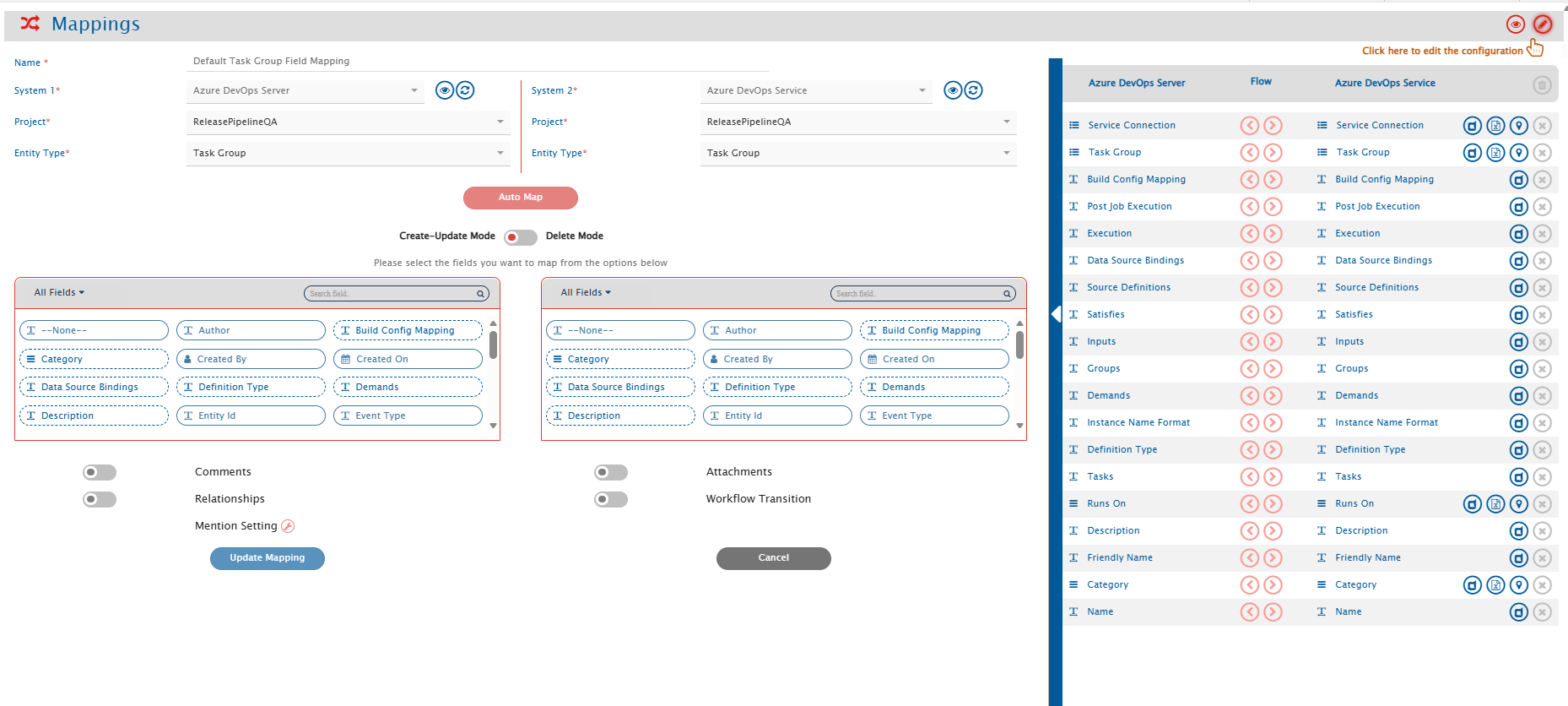
**Task Group**
* Similar to selecting the **Release Pipeline** entity, select the **Task Group** entity from the **Select Projects and Entities** section. Refer to [Select Projects and Entities](#select-projects-and-entities) and follow the steps below to create the mapping for this entity.
* Now, either click **Create from Scratch** to define the mapping from scratch or click **Auto Map** to automatically map all fields with the same name.
* You can also import a mapping. Refer to Task Group field mapping to import the default field mapping from Azure DevOps Services to Azure DevOps Server for the Task Group entity.
* You may further modify the imported mapping based on your use case.
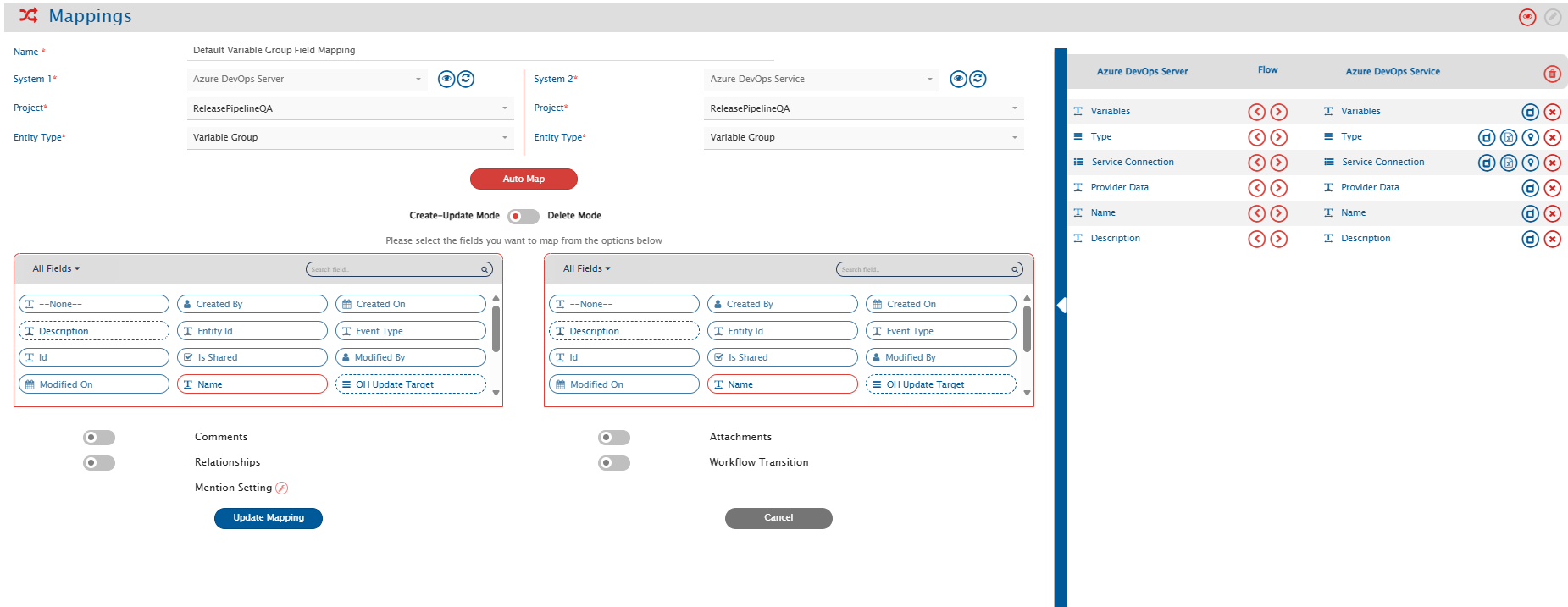
**Variable Group**
* Similar to selecting the **Release Pipeline** entity, select the **Variable Group** entity from the **Select Projects and Entities** section. Refer to [Select Projects and Entities](#select-projects-and-entities) and follow the steps below to create the mapping for this entity.
* Now, either click **Create from Scratch** to define the mapping from scratch or click **Auto Map** to automatically map all fields with the same name.
* You can also import a mapping. Refer to Variable Group field mapping to import the default field mapping from Azure DevOps Services to Azure DevOps Server for the Variable Group entity.
* You may further modify the imported mapping based on your use case.
### Save Integration
* To save the integration in active mode, slide the **Activate Integration** button to the right.
* As the final step, click **Save** to save the integration.
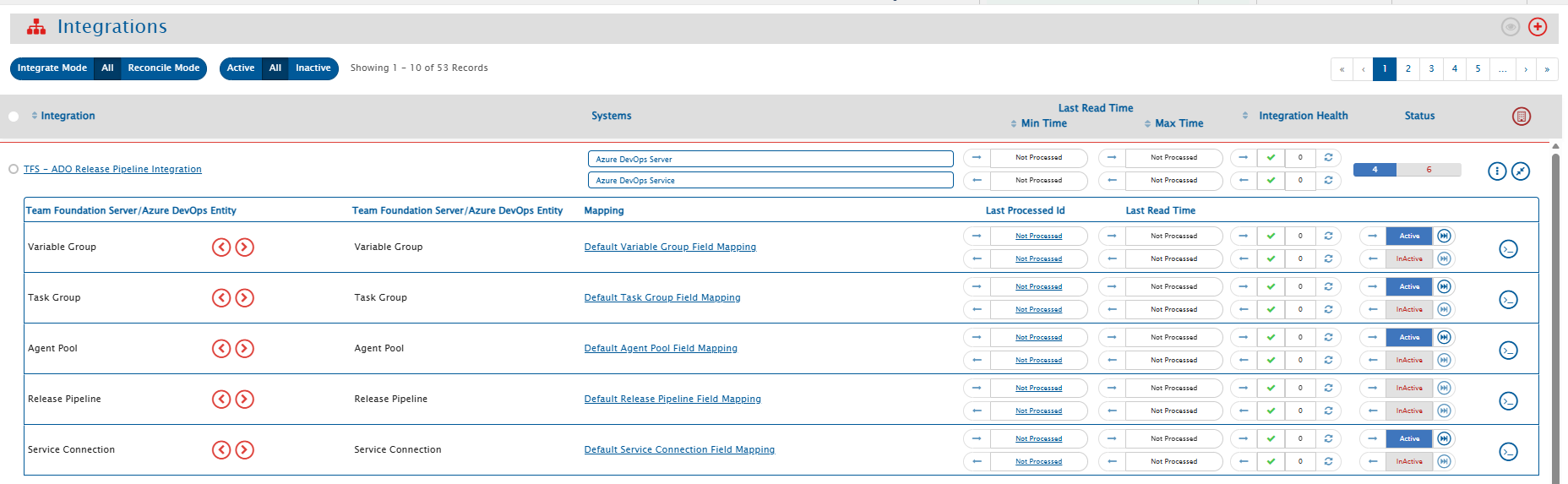
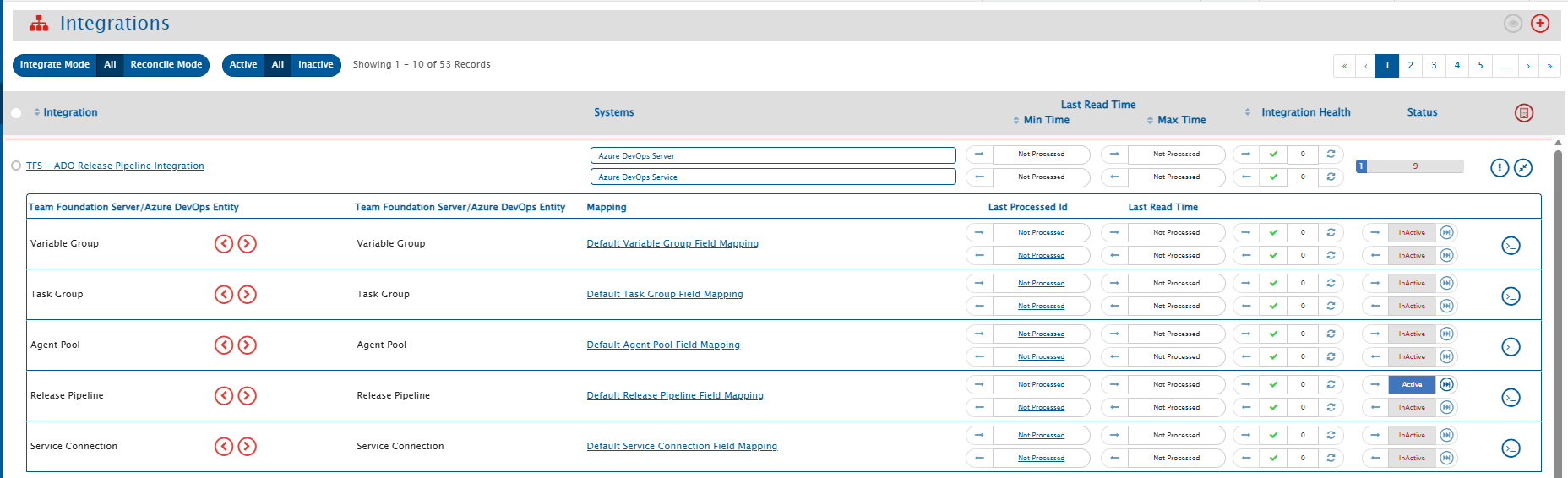
* The integration will be created. You will also get a confirmation pop-up at the bottom of the screen, and the integration will be listed in the integrations list.
### Activate and Test the Integration
* First, activate the integration for dependent artifacts such as **Agent Pool**, **Service Connection**, **Task Group** and **Variable Group**. Test the integration by synchronizing these dependent artifacts between the configured Azure DevOps Server (TFS) and Azure DevOps Service (ADO) projects.
* After the synchronization of dependent artifacts is successfully completed, activate the **Release Pipeline** integration and test it by synchronizing the Release Pipeline entity.
* Test the integration by synchronizing data between the specified Azure DevOps Server (TFS) and Azure DevOps Service (ADO) projects.
> **Note**: Do not use the **integration user credentials** to create entities in the systems, as the integration will not work in that case.
* Create/Update event in the source system and check whether the event synchronizes to the target system. Wait for one minute for the data to synchronize.
* If you face any issue, please refer to [possible reasons and their fix](https://docs.opshub.com/v7.215/help-center-index/faqs/general-faqs).